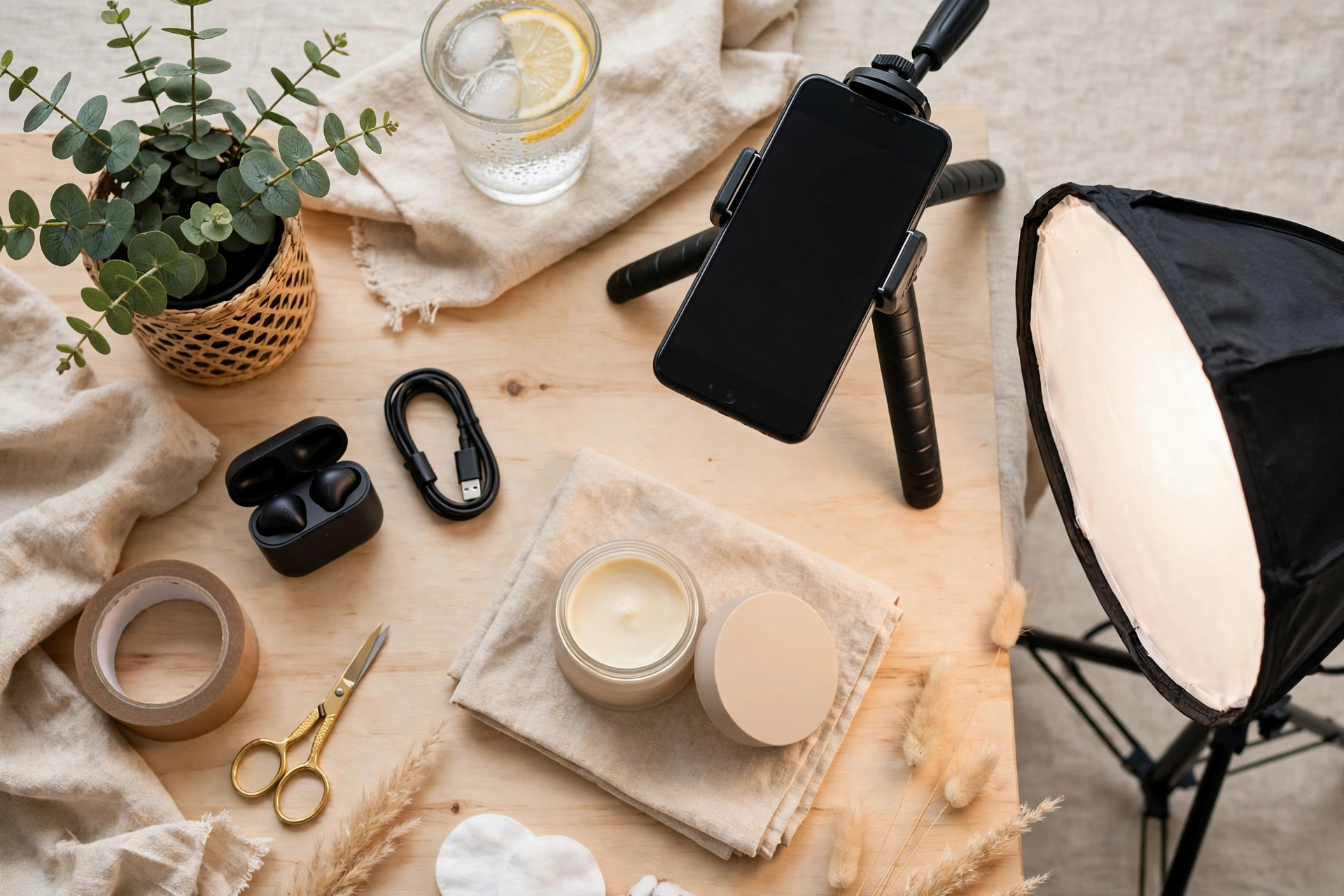
UGC Ads in Pakistan: How Local Brands Get Creator-Style Videos Without Hiring Creators
Open any social feed in Pakistan and you will notice a pattern. The ads that make you stop are often not the polished brand commercials. They are the ones that look like a real person talking about a product they use: a quick review recorded at home, an unboxing on a bedroom table, a before-and-after routine filmed in natural light. That style has a name — UGC, short for user-generated content — and it has become one of the most effective ad formats for local brands.
Here is the part most business owners miss: you do not need to hire creators or influencers to run UGC ads. Creator-style videos can be produced for your brand without influencer contracts, negotiations, or waiting on someone else’s schedule. This guide explains how UGC ads in Pakistan work, what formats perform, and what makes a creator-style video actually sell.
What UGC ads in Pakistan really are
UGC ads are advertisements designed to look and feel like content a customer would post, rather than content a brand would broadcast. They are usually filmed in a casual setting, spoken in everyday language, and built around one person’s experience with a product: what it does, why they like it, and what happened when they used it.
The key word is “style.” A UGC ad is not necessarily made by a customer, and it does not have to be. What matters is that it feels personal, unpolished in the right way, and native to the feed it appears in. Viewers are trained to skip anything that looks like a traditional ad. UGC earns a few extra seconds of attention because it does not trigger that reflex.
That is also why UGC works so well for local brands. A small business in Pakistan does not need a television-quality commercial to compete. It needs a video that feels like something a friend would send — honest, direct, and easy to understand.
Why creator-style videos work
There are a few simple reasons this format outperforms polished brand ads for many products:
- It blends into the feed. People scroll past ads and stop for people. A creator-style video looks like the content around it, so it gets watched instead of skipped.
- It builds trust faster. A person speaking plainly about a product feels more believable than a voiceover listing features. Even when viewers know it is an ad, the human tone lowers their guard.
- It explains products naturally. Instead of a feature list, viewers see the product in use: how it opens, how it looks, how it fits into daily life. That demonstration answers questions a static image cannot.
- It is faster and more flexible to produce. Without a full shoot setup, you can create several versions, test them, and keep the ones that work.
None of this means polished brand videos are dead. It means that for many everyday products — skincare, fashion, home goods, food, gadgets — the casual, human format often sells better than the glossy one.
Do you actually need to hire creators?
This is the question that stops many brands from trying UGC, so let us answer it directly: no, you do not need to hire creators to run UGC ads.
Hiring individual creators means finding the right people, negotiating rates, agreeing on deliverables, waiting for their content, and hoping it matches your message. That process works for some brands, but it is slow and unpredictable, especially for a business that needs ads this month, not next quarter.
The alternative is to have creator-style videos produced for you as a service. A presenter — a team member, or talent arranged by the agency — records the video following a script built around your product and your offer. You control the message, the quality, and the timeline, and you get content that looks and feels like creator content without depending on any individual influencer’s availability.
That distinction matters. This is not influencer marketing, and it does not involve hiring or managing creators. It is a production approach: your brand gets creator-style videos, made to order, on your schedule. If you want to explore how this fits alongside your other marketing, our services overview shows where UGC sits among the creative and performance work we do.
Formats that work for local brands
Not every UGC video looks the same. The format should match your product and your customer. These are the formats that consistently work for Pakistani brands:
- The honest review. A presenter talks about the product the way a real customer would: what they liked, what surprised them, and who it is for. Keep it specific — vague praise sounds like an ad, while details sound like experience.
- The unboxing. Opening the package on camera shows exactly what the customer will receive. This works especially well for online orders, because it removes the uncertainty of buying something unseen.
- The problem-solution demo. Start with the problem your customer already has, then show the product solving it. This format works because it mirrors how people actually shop: they search for a fix, not a feature list.
- The daily routine. Showing the product as part of a normal day — morning skincare, evening cooking, a workspace setup — helps viewers picture it in their own life.
- The reply-style video. Framed as an answer to a common question or comment, this format feels conversational and works well for products people ask about before buying.
Whatever the format, the structure is similar: a strong hook in the opening seconds, a clear demonstration, and one call to action at the end. If the first seconds do not earn attention, the rest of the video never gets watched.
What makes UGC convert, not just look native
Looking like creator content gets you watched. Selling requires more. These are the elements that separate UGC ads that convert from ones that just look nice:
- A hook that matches the customer, not the brand. Open with the problem, the result, or the question your customer is already thinking about — not with your brand name or a generic greeting.
- One message per video. A video that tries to sell three products or three benefits ends up selling none. Pick the strongest angle and commit to it.
- Real language. Script the video the way your customers speak, including the mix of Urdu and English they actually use. Overly formal or translated-sounding scripts break the illusion that this is a real person talking.
- Visible proof. Show the product, not just talk about it. Texture, size, packaging, and use — viewers believe what they can see.
- An offer that matches the ad. If the video promises a discount, a bundle, or free delivery, the page it sends people to must say the same thing. A mismatch between ad and landing page is one of the most common reasons ads get clicks but no orders, as explained in our guide on Meta ads clicks that do not turn into sales.
- One clear action. Order now, message us, visit the website — pick one and say it plainly at the end.
Briefing a UGC ad well
If you are having UGC videos produced for your brand, a good brief saves revisions and improves the result. Before production, be clear on:
- The product and the angle. Which product, and what is the single strongest reason someone should buy it?
- The audience. Who is watching, and what do they already know or worry about?
- The offer. Exactly what the viewer gets, with any conditions stated honestly.
- The tone. Friendly and casual, or confident and direct? Match the presenter style to your brand.
- What not to say. Claims you cannot support, comparisons you cannot prove, or promises the product cannot keep. Honest ads protect your brand and perform better over time.
A good production team will shape the script from your brief, but the brief itself should come from your knowledge of your product and your customers.
Test variations, then scale the winner
One of the biggest advantages of UGC is how practical it is to test. Because creator-style videos are faster to produce than polished commercials, you can make several versions — different hooks, different presenters, different offers — and learn which one your audience responds to before spending heavily behind a single video.
That testing discipline is the difference between brands that get lucky once and brands that build a repeatable system. Our creative testing guide explains how to run those tests on a small budget and read the results honestly. The rule is simple: test small, learn fast, and put real budget only behind the version that has already proven it can earn attention and orders.
Mistakes that kill UGC ads
- Over-scripting. If the presenter sounds like they are reading a corporate script, the format loses its whole advantage. Keep scripts conversational and let the presenter sound human.
- Making it too polished. Heavy studio lighting, perfect sets, and flawless editing make a video look like a brand commercial again. A little imperfection is part of the format’s charm.
- Skipping the hook. The opening seconds decide everything. If the video starts slowly, viewers scroll past before the product even appears.
- Too many messages. One video, one product, one reason to buy, one action. Everything else is a second video.
- Hiding the offer. Viewers who are interested need to know what to do next and what they get. A vague ending wastes a good video.
- Running one video and hoping. UGC works best as a system: several versions, tested, with the winner scaled. A single video is a lottery ticket, not a strategy.
Frequently asked questions
Is UGC the same as influencer marketing?
No. Influencer marketing means hiring creators to post to their own audiences. UGC ads are creator-style videos produced for your brand and run as your own ads. You do not need to hire, negotiate with, or depend on any individual creator.
Can a small business afford UGC ads?
UGC is one of the more accessible video formats, because it does not require a full shoot setup. The exact cost depends on how many videos you need, how many versions you want to test, and how complex the production is. For an exact quote, contact us with your product details.
Do UGC ads work for all products?
They work best for products people can see, understand, and imagine using: fashion, beauty, home goods, food, gadgets, and everyday essentials. Highly technical or premium products may still need polished brand videos or real demonstrations to carry trust. The right format depends on the product.
How many UGC videos should I start with?
Start with a small set of variations rather than a single video — different hooks or angles on the same product — so you can test and learn what your audience responds to. Once one version proves itself, that is the one to scale.
The bottom line
UGC ads work because they match how people actually use social media: they trust people more than brands, they watch what looks real, and they buy what they can see working. For local brands in Pakistan, that is good news. You do not need a big production budget or a roster of creators to compete. You need creator-style videos that are honest, well-briefed, tested, and matched to a real offer.
If you want UGC videos made for your brand — without hiring creators, and on a timeline that fits your business — contact KlikNest and tell us about your product. We will help you plan the formats, the angles, and the tests that give your ads the best chance to sell.
Get a free consultation
Want a second pair of eyes on your ads? Chat with KlikNest on WhatsApp – free consultation, no spam, ever.
Chat on WhatsApp

Leave a Reply