Brochure Design in Pakistan: Formats, Prices, and What Makes One Actually Sell
If you are looking for brochure design services in Pakistan, you are probably not looking for a pretty piece of paper. You are looking for something that makes a stranger pick up the phone, visit your shop, or ask for a quotation. That is the only honest test of a brochure: does it sell, or does it just sit on a counter?
This guide covers the formats available, what actually makes a brochure sell, the print and digital choices you will face, and what drives the price — so you can brief a designer with a clear head instead of choosing on looks alone.
First, give your brochure one job
Every brochure that works has one job, and everything in it serves that job. “Introduce our new housing scheme and get people to book a site visit” is a job. “Tell everyone everything we do” is not a job, and a brochure built around it will say nothing memorable.
Decide the job before you decide the format. Who will read this, where will they receive it, and what exactly should they do next? A brochure handed out at an exhibition, one left in a clinic waiting room, and one sent as a PDF on WhatsApp are three different tools, even if they describe the same business.
Formats: what to choose and when
Bi-fold
One sheet folded once, giving four panels. Best for a single product, a single offer, or a short introduction. It forces discipline: there is simply no room for everything, which is why bi-folds often sell better than longer documents. Good for price lists, event announcements, and product launches.
Tri-fold
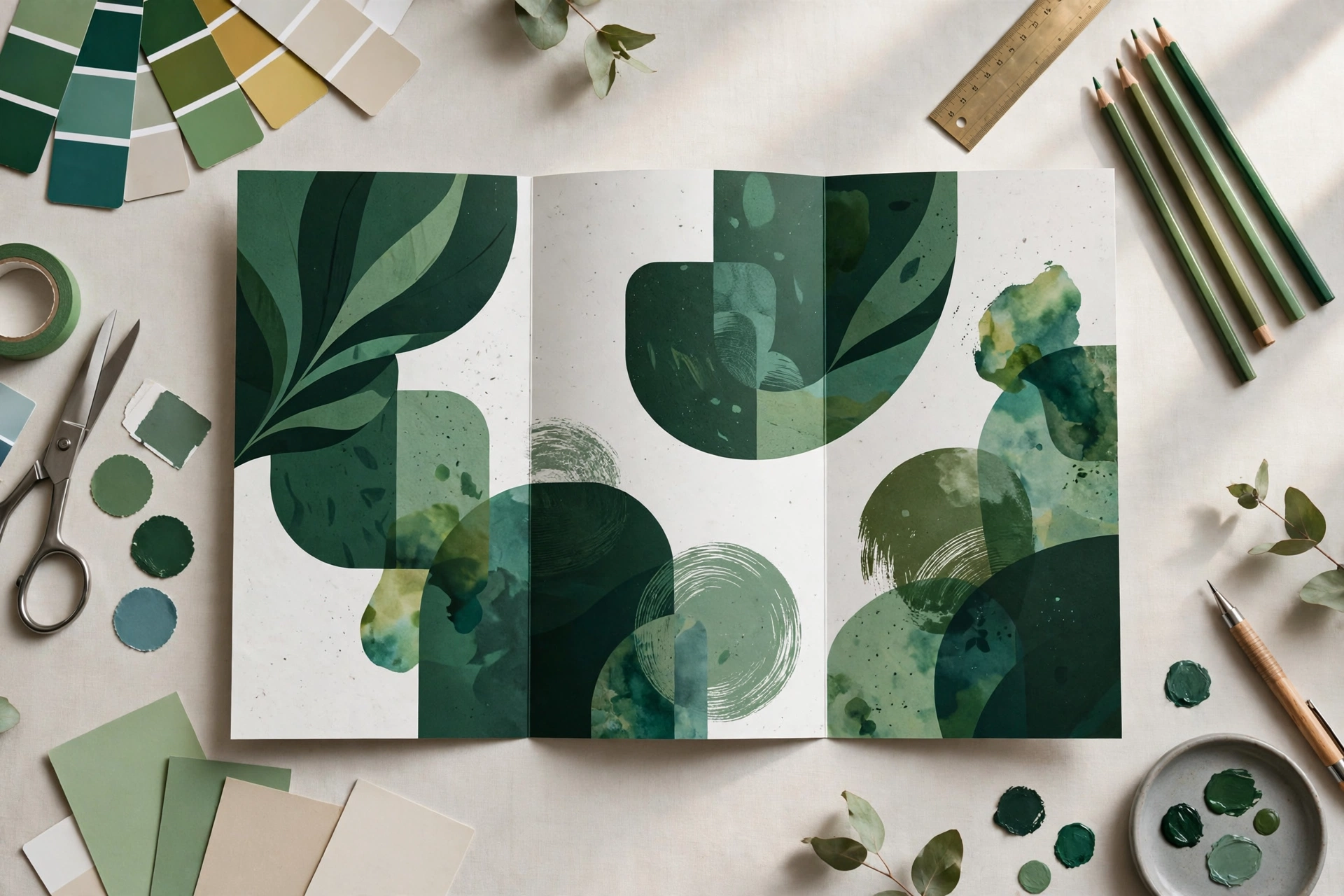
One sheet folded twice, giving six panels. A practical default for many businesses: it fits in a standard envelope and a display rack, and its panel order naturally guides the reader from the cover, through the details, to the contact panel. Best for services, clinics, schools, restaurants, and property projects that need a little more room than a bi-fold allows.
Multi-page booklet
Eight pages or more, stitched or stapled. Best when the buyer genuinely needs detail before deciding — a product range, a housing project with floor plans, or a training institute with many courses. Only choose a booklet if the content earns the length; a thin booklet with filler pages feels worse than a strong tri-fold.
Digital brochure (PDF)
A PDF designed for screens and WhatsApp, with clickable phone numbers, links, and a file size that actually sends. Best for online campaigns, email follow-ups, and any audience that will read on a phone. If your brochure will travel on WhatsApp, design for the phone screen first: large type, one idea per screen, and contact details that can be tapped, not typed.
Flyer versus brochure
A flyer announces one thing once. A brochure explains and persuades. If your message fits on one side of a page, you need a flyer, not a brochure — and you will save money by admitting it.
What makes a brochure actually sell
A headline that speaks to the reader’s problem
The cover headline is not your business name in large type. It is the reader’s problem, stated plainly, or the outcome they want. A reader gives a brochure a few seconds; the headline decides whether they open it or put it down. Write it for the customer, not for the owner.
One clear offer and one clear next step
Every selling brochure makes one offer and asks for one action: call this number, visit this outlet, book a visit, scan for details. Brochures that ask for three different actions get none of them. Put the next step on the cover or the final panel, and repeat it once inside. Make the phone number and WhatsApp number large enough to read at a glance.
Proof, not adjectives
Readers believe specifics they can check: what is included, how the service works, what happens after they buy, and how to reach a real person. Vague claims about being the best in the market convince nobody and can actively put a careful buyer off. If you have a process, a guarantee, or a service promise you genuinely keep, put it in plain words.
Visuals that show the real thing
Use real photographs of your own products, premises, and work wherever possible. Stock photography is recognisable, and it quietly suggests that the business behind the brochure may not be real either. If you sell food, show your food. If you sell homes, show your homes. One honest photograph beats a page of decoration.
Readability before decoration
Clean type, short paragraphs, and space around each section will always beat a crowded layout, however colourful. The reader should be able to scan the brochure in under a minute and still understand the offer. If they cannot, the design has failed no matter how attractive it looks.
You can see the kind of design work involved on our services overview, and the KlikNest homepage shows how we present brands in general.
Print choices that affect the result
Paper and finish change how a brochure feels in the hand, and that feeling changes how the business is judged. A thin, flimsy sheet suggests a business that cuts corners; a sturdy sheet with a clean finish suggests one that does not. The usual choices are a lighter paper for mass distribution and a thicker card stock for premium pieces, with matte or gloss finishes depending on whether you want an understated or a vivid look. Your designer should show you samples before a full print run, because paper looks very different on screen than in the hand.
Colour accuracy matters too. The colours on your screen will not match the printed sheet exactly, so approve a printed proof for anything where brand colour is important, rather than discovering the difference in a thousand copies.
Digital or print — or both?
Most businesses in Pakistan still need both, for different moments. Print works where the customer is physically present: shops, exhibitions, clinics, and site offices. Digital works where the customer is on their phone: WhatsApp follow-ups, social media, and email. If your budget forces a choice, choose the format that reaches the customer at the moment they decide. A property brochure that only exists as a PDF is useless at a site office, and a print-only brochure cannot be forwarded on WhatsApp.
What brochure design in Pakistan costs
As with any design work, there is no single price, because the cost depends on what goes into it. The main drivers are: the format and number of pages, how much writing help you need, whether custom photography or illustration is required, the complexity of the design, the paper and finish chosen, the print quantity, and whether you need a digital version as well as print. A simple tri-fold from content you already have will cost far less than a multi-page booklet with photography, copywriting, and print management.
For an exact quote on your brochure, contact KlikNest for an exact quote with your format, page count, existing content, and whether you need print, digital, or both. A designer who quotes without asking those questions is guessing.
Test before you print a thousand
Never print a large run from a screen approval alone. Print a small proof, hand it to someone who has never seen your business, and watch what they understand from it in one minute. If they cannot state your offer and your next step, the brochure is not ready — and fixing it now costs almost nothing compared with reprinting later. The same discipline behind testing creative on a small budget applies here: test small, learn, then commit.
Common mistakes to avoid
The most common mistake is trying to say everything: a brochure packed with every product, every feature, and every claim, which the reader abandons halfway. The second is hiding the contact details in small type on the last panel, as if the business were shy about being contacted. The third is letting the brochure go out of date — old prices, old numbers, discontinued products — which quietly destroys trust. Review your brochure whenever your offer changes, and never hand out a version you know is wrong.
What to prepare before you brief a designer
Gather these before the first meeting: your logo in high quality, your written content (rough is fine), real photographs, the offer and the next step you want the reader to take, and the format and quantity you have in mind. Decide who approves the final version. Unclear approval is the most common reason brochure projects drag on.
Frequently asked questions
Should I choose a bi-fold or a tri-fold?
Choose a bi-fold if you have one product or one offer and want the reader to act fast. Choose a tri-fold if you need more room to explain a service or a range. If neither fits your content comfortably, the content is the problem, not the format.
Do I need a digital version as well as print?
In most cases, yes. Print serves face-to-face moments and digital serves phone-based follow-ups. If you can only afford one, pick the format that reaches your customer at the moment they decide.
What affects the print quantity I should order?
How and where the brochure will be distributed, how often the content changes, and how much storage you have. Ordering far more than you will use before the content changes is wasted money, however cheap each copy looks.
What should I send a designer to get started?
Your logo, your content (even rough), real photographs, your offer, and the action you want the reader to take. A good designer will shape rough material into a finished brochure, but nobody can invent your offer for you.
Get your brochure designed
A brochure earns its cost the first time a stranger reads it, understands your offer, and takes the next step. Give it one job, one offer, and one clear action, and it will keep selling long after it leaves your hand. To discuss your brochure, get in touch with KlikNest — tell us your format, your content, and whether you need print, digital, or both, and we will take it from there.
Get a free consultation
Want a second pair of eyes on your ads? Chat with KlikNest on WhatsApp – free consultation, no spam, ever.
Chat on WhatsApp

Leave a Reply