Podcast Production in Pakistan: How Brands Turn One Episode Into a Month of Content
A founder records one honest conversation about their business, and then nothing happens. The episode goes up once, gets a few listens, and disappears from everyone’s feed. That is not a podcast problem. It is a production problem.
Good podcast production services in Pakistan treat the recording as raw material, not as the finished product. One well-planned episode can feed your social media, your website, and your sales conversations for weeks. This article explains how that system works, what production actually includes, and how to plan an episode so it keeps working long after recording day.
What podcast production in Pakistan actually includes
When people say “podcast production,” they often mean only the recording. In practice, production covers the whole chain from idea to published episode:
Pre-production. Choosing a topic your customers actually care about, shaping it into a clear outline, and preparing questions that lead to useful answers rather than vague talk. A loose chat can be enjoyable, but an episode built around real customer questions is far easier to reuse later.
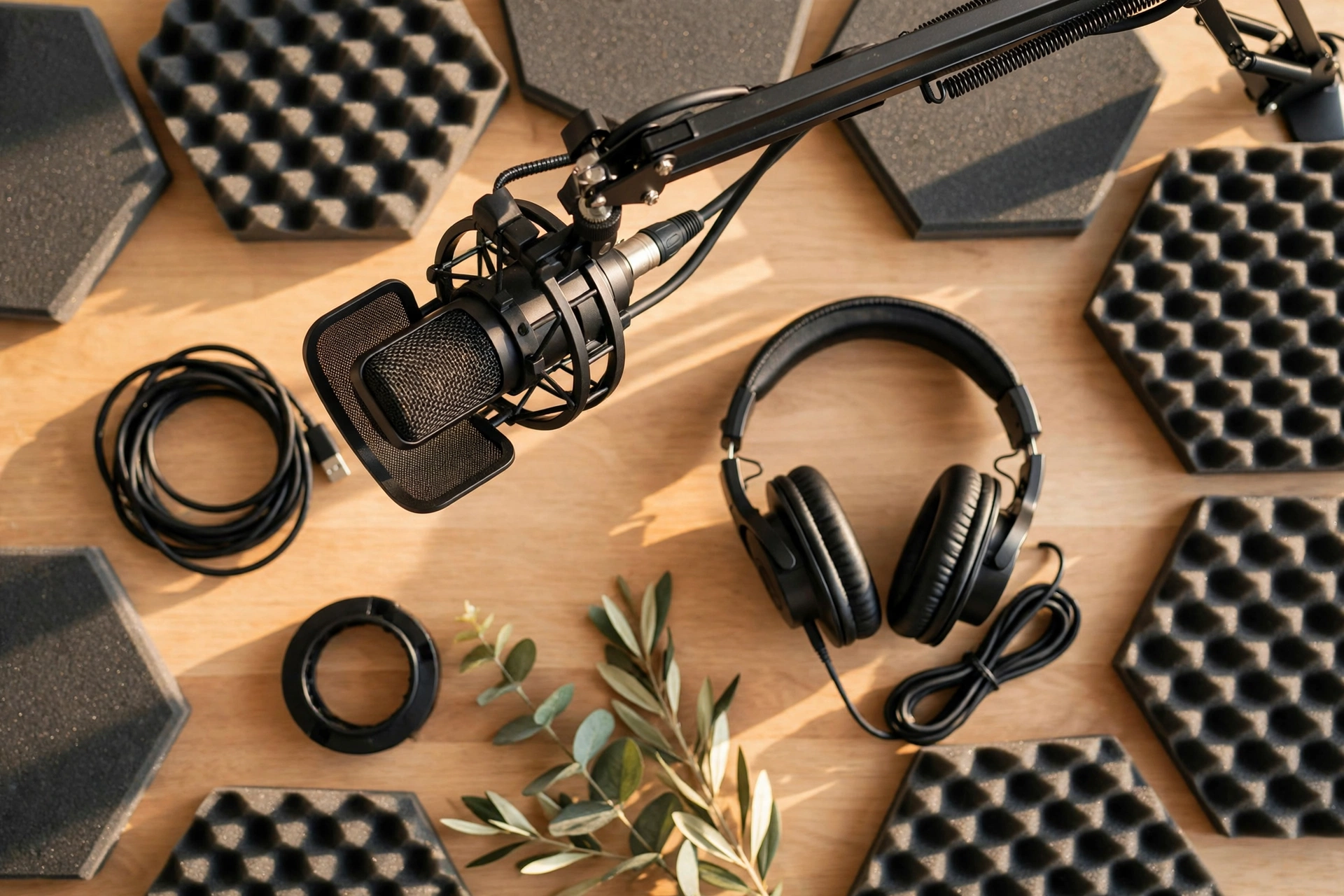
Recording. Clean audio matters more than a fancy studio. Listeners forgive an ordinary video background, but they abandon episodes with echo, background noise, or uneven volume. A proper setup, a quiet room, and a host who speaks at a steady pace make editing far simpler.
Editing. Removing long pauses, mistakes, and tangents, balancing the sound, and adding a short intro and outro. Editing is also where an episode gets its structure: chapters, clear transitions, and moments that can stand alone as short clips.
Packaging. A title that says what the listener will learn, a short description, cover art, and show notes with links. Packaging is what makes someone press play in the first place.
Distribution. Publishing to the platforms your audience already uses, such as YouTube, Spotify, and Apple Podcasts, and then turning the episode into shorter pieces for social media. An episode that only lives on one platform reaches only part of your audience.
A brand that understands this chain stops asking “when will we record again?” and starts asking “how much content did we get from the last recording?”
Why one episode stretches so far
A single conversation contains far more than one piece of content. Think of it as a content system:
- The full episode. The long-form version for people who want depth: founders, serious buyers, and partners who want to understand how you think.
- Short video clips. The strongest two or three moments, cut as vertical clips for social media. A clear opinion, a useful answer, or a short story works best. Clips are what new listeners discover first.
- Quote posts. One sharp line from the episode, designed as a simple graphic or a text post. These are quick to produce and easy to share.
- A written article. The episode’s main points, rewritten as a blog post for people who prefer reading and for search visibility.
- An email or WhatsApp update. A short note to existing customers: “we discussed this problem this week, here is the episode.”
None of this requires recording more. It requires planning the original episode so that these pieces exist inside it. That is the real job of a production team: not just pressing record, but designing an episode that can be taken apart and reused.
Plan the episode for reuse before you record
Most of the value is decided before anyone sits in front of a microphone:
Start from customer questions. Pick a topic your customers already ask about: pricing, quality, delivery, common mistakes, or how to choose a supplier. Episodes built on real questions get reused because the answers stay relevant.
Build in clip moments. Ask questions that produce short, complete answers. “What is the biggest mistake you see buyers make?” usually produces a better clip than “tell us about your journey.” Plan three or four such moments per episode.
Keep chapters clear. If the conversation moves through distinct sections, each section can become its own clip or post. A wandering conversation is hard to cut; a structured one practically edits itself.
Record video as well as audio. Even a simple camera setup doubles your options. Video clips perform well on social platforms, and the full video version can live on YouTube while the audio version serves podcast apps.
Capture the extras. A few photos from recording day, a short behind-the-scenes clip, and the guest’s own words about the episode all become usable content. Ask the guest to share the episode when it goes live; their audience is often your next audience.
The production workflow, step by step
A typical episode moves through a simple sequence:
Brief. The topic, the audience, and the one message the episode must deliver. If the message is unclear, the episode will be too.
Outline and questions. Not a script, but a roadmap: opening, main sections, and a close that tells the listener what to do next.
Recording. Usually a single session. Good production keeps it relaxed; a stiff host produces stiff content that nobody clips.
Edit and review. The raw recording is cleaned, structured, and cut into the full episode plus the agreed short clips. The brand reviews before anything is published, so nothing goes out that misrepresents the business.
Publish and distribute. The episode goes to podcast platforms and YouTube, and the clips and posts roll out over the following weeks rather than all on one day. Spacing them out is what turns one recording day into a month of visible content.
Measure and learn. Which clips got shared? Which questions drew comments? The answers shape the next episode’s topic. Small, steady testing of formats beats guessing; the same discipline applies to any creative that goes out under your brand, which is why it helps to understand how creative testing works before spending on promotion — see our guide on creative testing on small budgets.
What to look for in a production partner
If you hire help, judge them on the system, not the equipment list:
- Do they plan episodes around your customers’ questions, or just record whatever you say?
- Do you get short clips and written pieces along with the full episode, or only an audio file?
- Can they show you a finished episode and the clips that came from it?
- Is there a review step before publishing?
- Do they handle distribution, or does the episode stop at delivery?
A partner who only records is selling you a file. A partner who plans, edits, packages, and distributes is selling you a month of content.
Common mistakes that waste a good episode
Recording without a topic. An episode about “our business in general” produces nothing worth clipping. One clear topic per episode, always.
Publishing once and stopping. The full episode is the beginning, not the launch. If the clips never come out, most of the value stays locked inside a file nobody opens.
Ignoring audio quality. Listeners decide within a minute whether to stay. Echo and background noise end episodes early, however good the content is.
Skipping the description. A vague title and an empty description mean even interested listeners cannot tell what the episode offers. Write the title and description as carefully as the episode itself.
No next step. Every episode should end by telling the listener what to do: visit the website, ask a question, or book a consultation. Content without a next step is entertainment, not marketing.
Briefing checklist for your first episode
Before recording, you should be able to answer these:
- Who is this episode for, in one sentence?
- What single question does it answer?
- Which three moments do we want as clips?
- Who is the guest, and why will the audience trust them?
- What should the listener do after listening?
If those answers are ready, the recording session is usually smooth. If they are not, spend the time on the brief first; it is cheaper than re-recording.
Frequently asked questions
Do I need a professional studio to start a podcast?
No. A quiet room, decent microphones, and careful editing matter more than an expensive studio. What you should not compromise on is clean audio and a clear topic.
How long should an episode be?
As long as the topic needs. A focused conversation that answers one question well is better than a long episode that wanders. Many brand episodes work well when they stay tight and structured rather than stretching to fill time.
How often should a brand publish?
Consistency beats frequency. A regular rhythm your team can sustain — with clips released between episodes — builds an audience more reliably than a burst of episodes followed by silence.
Can old episodes be reused?
Yes, and they should be. A good answer does not expire quickly. Old episodes can be re-clipped, quoted, or turned into articles whenever the topic becomes relevant again, which is exactly how one recording keeps paying back.
Start with one good episode
You do not need a season of episodes to see whether podcasting suits your brand. One well-planned episode, properly produced and properly reused, will tell you more than a dozen rushed recordings. Plan the topic around a real customer question, record it cleanly, and make sure the clips and posts actually go out over the following weeks.
If you want help planning and producing that first episode, take a look at our services overview or get in touch to discuss your topic. And if you are weighing podcasting against other content formats for your business, the KlikNest homepage gives a quick picture of how the pieces fit together.
Ready to turn one conversation into a month of content? Contact us and tell us the question your customers keep asking — that is usually your first episode.
Get a free consultation
Want a second pair of eyes on your ads? Chat with KlikNest on WhatsApp – free consultation, no spam, ever.
Chat on WhatsApp

Leave a Reply