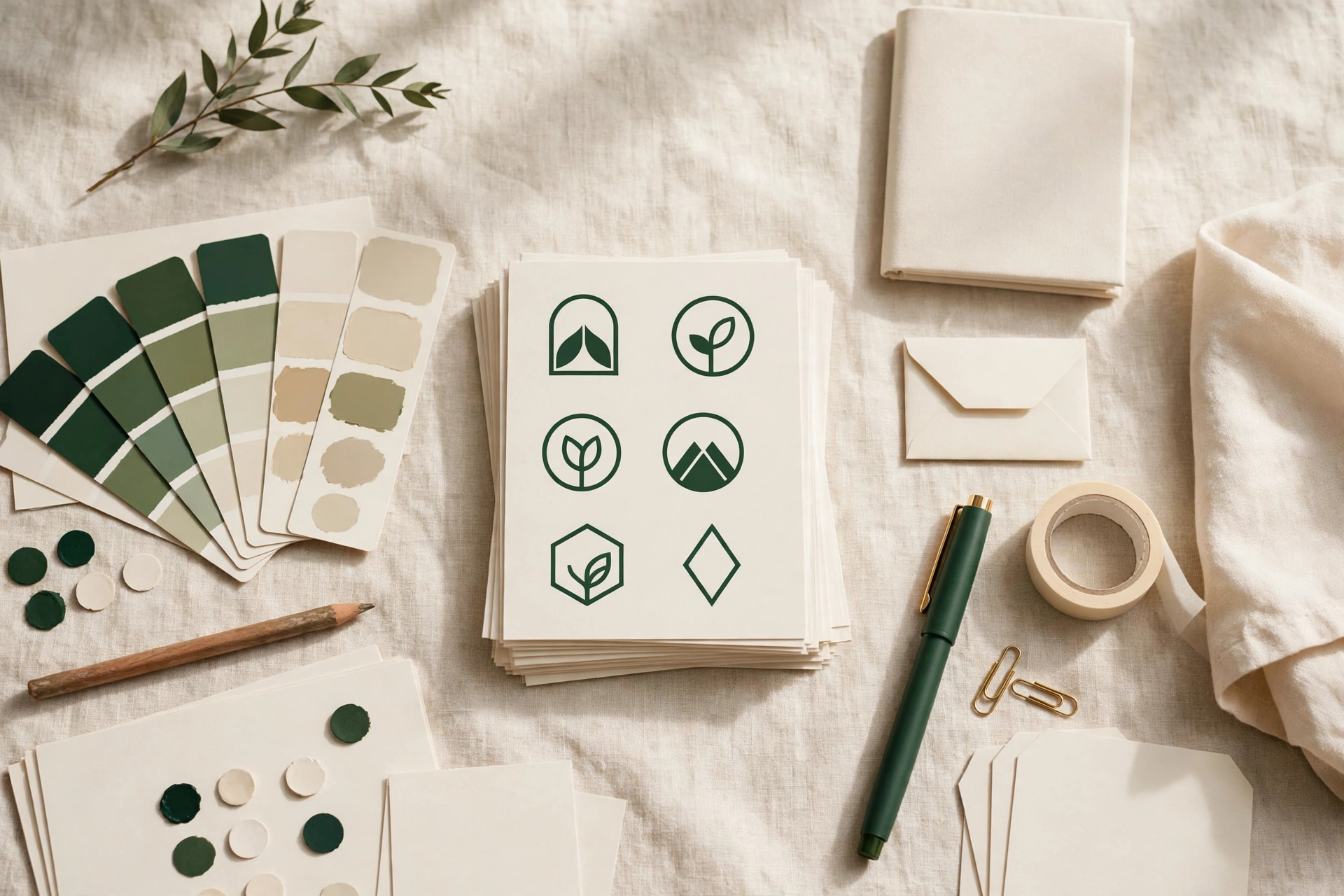
What Is a Brand Kit? Everything Your Business Needs in One Design File
Open any growing business’s marketing and you will usually see the same problem: the logo looks slightly different on every post, the colours shift from one flyer to the next, and nobody can find the right font when a new design is needed. Customers may not notice each small difference, but together they make the business look inconsistent — and inconsistency quietly costs trust.
A brand kit fixes this. It is one organised file, or one shared folder, that holds everything anyone needs to design for your business correctly. This article explains what a brand kit is, what belongs inside it, who needs one, and how to brief one properly.
What is a brand kit, in plain words?
A brand kit is the single source of truth for how your business looks. Instead of hunting through old emails for a logo, guessing which shade of green you used last time, or retyping the same business details onto every new design, your team opens the kit and finds the approved versions of everything.
Think of it this way: your logo is one item. Your brand kit is the box that holds the logo, plus the colours, fonts, templates, and rules that make sure the logo always appears correctly. A business with a logo but no kit has to re-decide its look every single time it creates something. A business with a kit decides once, and then reuses that decision everywhere.
Brand kits are used by everyone who touches your marketing: designers, printers, social media managers, video editors, and even staff who make simple posts. When everyone works from the same kit, a brochure, a social post, and a shop banner all look like they came from the same business — because they did.
What belongs inside a brand kit?
A useful kit is complete but not bloated. These are the pieces that matter:
Logo files, in every version you need. The main logo, a simplified version for small sizes, a light version for dark backgrounds, and a dark version for light backgrounds. Each should be available in formats suitable for print and for screens, so nobody has to stretch a low-quality image from a social media post to fit a banner.
Colour palette. The exact colours of your brand, with their codes, so a designer in one city and a printer in another produce the same shade. Include the main colours and the supporting ones, plus a note on which colour leads and which ones support.
Fonts. The approved typefaces for headings and body text, with guidance on where each is used. A kit with too many fonts creates the same mess it was meant to solve, so most kits settle on a small, clear set.
Templates. Ready-made starting points for the things you create often: social media posts, price lists, quotations, and presentations. Templates save time and keep everyday designs consistent without a designer having to start from scratch each time.
Imagery style. A short note on the kind of photos and graphics that suit your brand: bright or muted, people-focused or product-focused, formal or friendly. This stops well-meaning team members from picking images that clash with everything else.
Usage rules. Simple dos and don’ts: minimum clear space around the logo, backgrounds it should never sit on, and colours it should never be recoloured to. These rules are short, but they prevent the most common damage to a brand’s look.
Business details. The exact business name spelling, tagline if there is one, phone number, website, and address format. Small inconsistencies here — a different spelling on one flyer, an old number on another — confuse customers more than businesses realise.
What a brand kit is not
A brand kit is not a full brand identity project, and it is not a marketing strategy. It does not decide what your business stands for or who your customers are. It takes those decisions, once made, and turns them into a usable package.
That distinction matters when you brief one. If your business has never settled its name, colours, or logo, that design work comes first. A kit organises and protects design decisions; it cannot invent them. If you already have a logo and a general look but everything lives in scattered files, a kit is exactly the right next step.
Who actually needs a brand kit?
Any business that creates marketing material regularly:
- Businesses with a team. The moment more than one person designs for you, a kit stops each person from inventing their own version of your brand.
- Businesses that advertise. Ads, brochures, and profiles all draw from the same kit, which is why a brochure designed from your kit and a company profile built from the same files look like they belong together. See how this works in practice in our guides to brochure design in Pakistan and company profile design in Pakistan.
- Businesses working with outside designers or printers. Handing over a kit instead of a handful of old files means less back-and-forth, fewer errors, and faster delivery.
- Franchises and multi-branch businesses. Every branch should look like the same business. A kit is how that happens.
If you only ever make one simple post a month and one person handles it, a kit is still useful, but it can stay small. The kit should match the size of your marketing, not exceed it.
How teams actually use a brand kit day to day
A kit earns its keep in ordinary moments:
- A social media manager opens the template, drops in the new offer, and posts — without asking anyone which font to use.
- A printer receives the logo in the correct format and colour codes, and the printed banner matches the website.
- A new designer joins and, instead of guessing your style from old posts, opens the kit and produces work that looks right from the first day.
- A salesperson sends a quotation that carries the same colours and logo as your website, which makes the whole business feel more established.
None of this requires design skill from the person using the kit. That is the point: the skill went into making the kit, so using it stays simple.
How to brief a brand kit properly
If you are having a kit made, the brief decides its quality. Provide:
- Your current logo files, even if they are imperfect, plus any earlier versions you no longer want used.
- Your website and social pages, so the designer can see what your brand already looks like in public.
- Examples of designs you like and dislike, with one line each on why. Taste is hard to describe, but examples make it concrete.
- The materials you create most often, so the templates cover real needs rather than guessed ones.
- Who will use the kit. A kit for a single owner looks different from a kit for a team with a printer and a video editor.
Also agree on one practical point before work starts: who keeps the master copy, and how updates are shared. A kit that lives only on one person’s laptop will be out of date within months. A shared folder with a named owner stays current.
Mistakes that make a brand kit useless
A kit nobody opens. If the kit is buried in an email attachment or saved under an unclear name, the team will keep guessing. Store it somewhere obvious and tell everyone it exists.
Outdated files. An old logo version inside the kit is worse than no kit at all, because people trust the kit and use the wrong file confidently. Remove old versions when new ones are approved.
Too many options. A kit with a dozen fonts and endless colour choices is not a kit; it is a catalogue. Good kits limit choices so decisions stay easy.
Rules nobody follows. Short, clear usage rules work. A long rulebook nobody reads does not. Keep the rules to the few that prevent real damage.
No templates. A kit with only a logo and colours still leaves every post to be designed from scratch. Templates are what turn a kit into a daily time-saver.
What does a brand kit cost?
Cost depends on what has to be created versus what already exists. A business with a finished logo and clear colours needs mainly organisation, templates, and rules. A business starting from a rough logo or inconsistent colours needs design work first, which takes longer. The number of templates, the range of formats, and whether print-ready files are included all affect the effort involved.
Because of that, honest pricing comes from a short conversation about what you already have and what you actually produce. If you would like an exact figure for your business, contact us for an exact quote after a quick look at your current materials.
Frequently asked questions
I already have a logo. Do I still need a brand kit?
Yes, in most cases. A logo alone does not tell anyone your colours, fonts, or templates. The kit is what turns a single logo into a consistent look across everything you publish.
Can a brand kit be updated later?
Absolutely, and it should be. Businesses change: a new service launches, a template gets improved, a colour is adjusted. Update the master copy, tell the team, and remove the old version so nobody uses it by mistake.
Who keeps the master file?
One named person or one shared folder that the team can access. The worst arrangement is a kit that exists only on one device, or in several different versions across several inboxes.
Is a brand kit only for large companies?
No. Small businesses benefit most, because they usually cannot afford a designer for every small job. A kit lets owners and staff produce consistent material themselves, and lets outside designers work faster when they are hired.
One file, every design
A brand kit is a small investment that removes a daily friction: the guessing, the searching, and the slow drift that makes a business look different everywhere it appears. Get the logo, colours, fonts, templates, and rules into one place, keep it current, and make sure everyone who designs for you knows where it lives.
If your marketing currently pulls its look from scattered files and memory, that is the problem a kit solves. Take a look at our services overview to see where a brand kit fits among our design services, or get in touch to discuss putting yours together.
Want one file that keeps every design on-brand? Contact us and tell us what you already have — logo, colours, or just an idea — and we will take it from there.
Get a free consultation
Want a second pair of eyes on your ads? Chat with KlikNest on WhatsApp – free consultation, no spam, ever.
Chat on WhatsApp

Leave a Reply