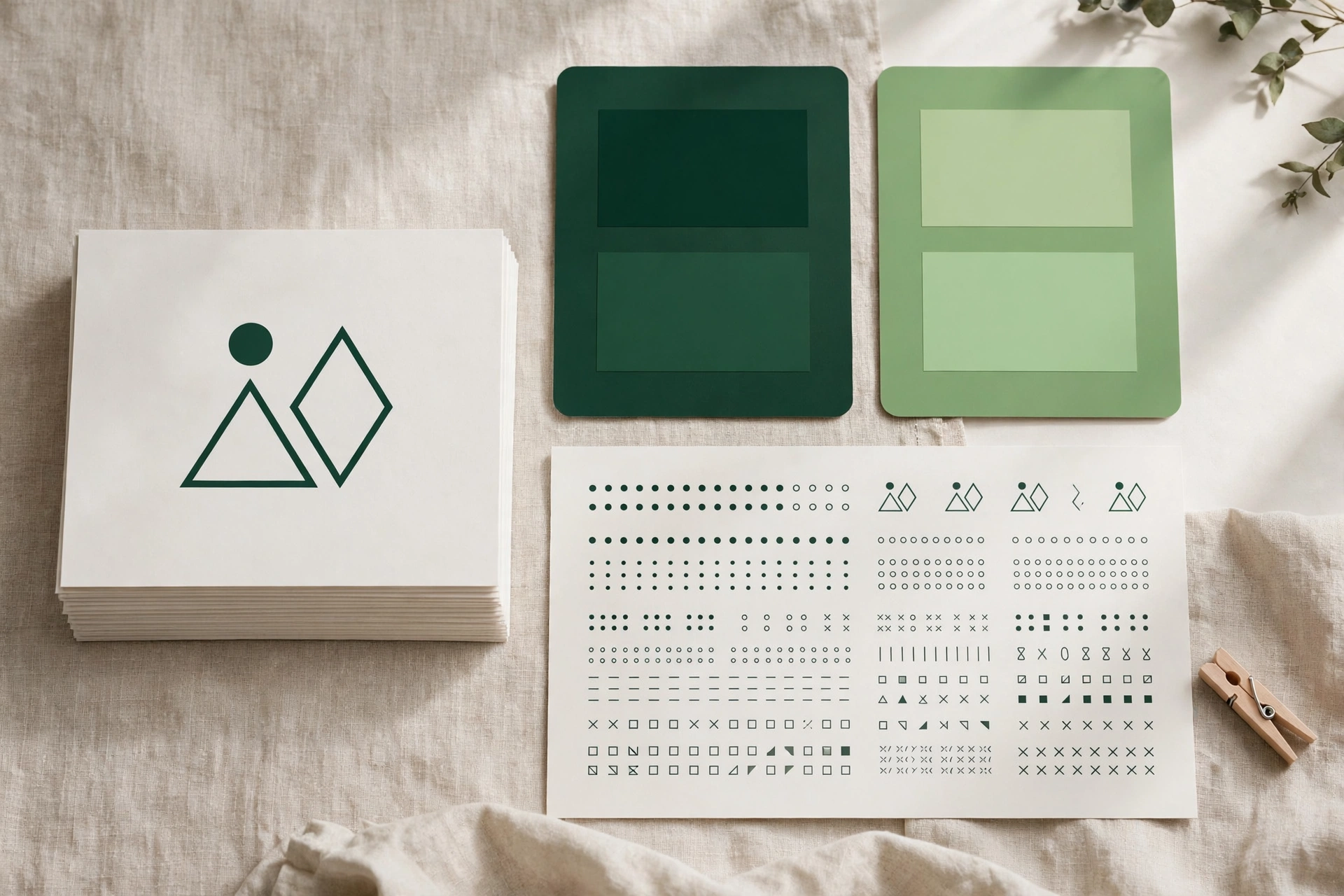
Ask a business owner what their brand is and most will point to their logo. That is understandable — the logo is the part of the brand you see first — but it is also the most common misunderstanding in branding. A logo is not a brand, and a brand is not a logo. The question of brand identity vs logo is really a question about scope: one is a single mark, the other is the whole system that mark lives inside.
This matters because the two are bought differently, cost differently, and solve different problems. A business that needs a logo and buys a full identity wastes money. A business that needs an identity and buys only a logo ends up with a mark that looks different everywhere it appears — on the shop board, on the packaging, on the social pages — and wonders why nobody recognises it. This guide explains the difference plainly, so you can buy the right one for where your business is today.
What a logo actually is
A logo is a single visual mark that identifies your business: a wordmark (your business name set in a distinctive way), a symbol, or a combination of the two. Its job is recognition. When a customer sees it on a shop sign, a delivery box, or a social media profile picture, they should know — in a second — whose business it is.
A good logo is simple enough to be recognised at a glance, distinct enough not to be confused with a competitor, and flexible enough to work in different places: on a light background and a dark one, large on a billboard and tiny as a profile picture, in colour and in a single colour. That is the whole job description. A logo does not explain what you sell, does not state your prices, and does not tell your story. It identifies you, and it does that one job well. A logo is usually delivered as a set of files: the primary mark, versions for light and dark backgrounds, an icon-only version for small spaces, and the source files. Our guide to logo design cost in Pakistan explains what different logo packages typically include and what to check — source files and ownership — before you pay.
What a brand identity actually is
A brand identity is the complete visual system built around the logo. The logo is one piece of it — usually the first piece, and the most visible — but the identity is everything that makes the business look and feel like itself, consistently, wherever a customer meets it.
A typical brand identity includes the logo family (the full set: primary logo, variations, icon, and the rules for when each one is used); colours (a defined palette with exact values, so the green on your packaging is the same green on your website and your shop board); typography (the fonts for headings and body text, used the same way everywhere); imagery style (the kind of photography and graphics the brand uses); tone of voice (the way the brand writes — formal or friendly, short or detailed); and usage guidelines (a short document tying it all together — how much empty space the logo needs, what never to do with it, which colours go together).
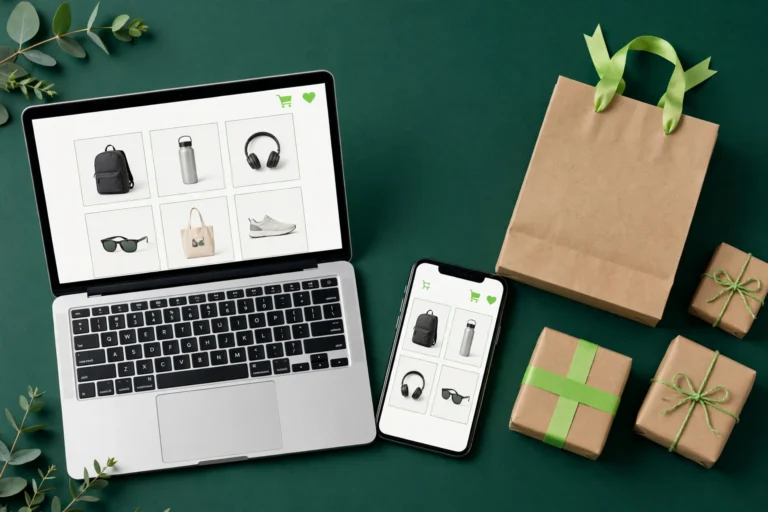
The point of all of this is consistency. A customer who sees your shop board, then your Instagram page, then your packaging should feel they are dealing with the same business at every step. That feeling — recognition plus trust — is what an identity builds. A logo alone cannot build it, because a logo alone says nothing about colours, fonts, or tone.
Brand identity vs logo: the difference in one paragraph
A logo is one mark that identifies your business. A brand identity is the system — logo, colours, typography, imagery, tone, and rules — that makes your business recognisable and consistent everywhere it appears. The logo is the signature; the identity is the handwriting, the paper, and the envelope. You can have a signature without the rest, and many small businesses do. But the moment your business appears in more than one place — a shop and a Facebook page, a product and a delivery box — the rest of the system starts to matter, because without it, every appearance looks like a different business.
That is the core of the brand identity vs logo distinction. The logo answers “who is this?” The identity answers “is this the same business I met before, and can I trust it?” Both questions matter, but they are different questions, solved by different scopes of work.
Which one does your business actually need?
The honest answer depends on where your business is, not on what sounds impressive:
You are just starting out. You need a logo. A clean, professional mark on your shop, your social pages, and your first packaging is enough. An identity system at this stage is usually premature — the business itself is still settling. Spend on the mark, keep the source files, and build the system later.
You are growing and starting to look inconsistent. Your Facebook page uses one colour, your shop board another, your packaging a third. Customers have met you in three places and remember three different businesses. You need an identity. The logo you already have can stay — a good identity project often keeps the existing mark and builds the system around it.
You are entering tenders, corporate clients, or retail shelves. You need an identity, and you need it documented. A company that bids for contracts is judged on presentation, and a company profile design that carries a consistent identity reads as a serious, organised business. An inconsistent one reads as a risk.
You are rebranding. You need an identity, not just a new logo. A new mark on the old colours, fonts, and tone is a coat of paint on the same house. Rebranding means rethinking the system — which is exactly the moment to define it properly, with guidelines, so the new look actually sticks.
You are launching a product line or a second brand. You need an identity for the new line, even if the parent brand already has one. The new product needs its own consistent look, and rules for how it relates to the parent brand.
The mistakes that cost the most
Buying a logo and calling it a brand. The most common mistake. The business gets a mark, puts it everywhere, and assumes branding is done. Then every designer, printer, and social media handler invents their own colours and fonts, and the brand slowly falls apart in public. If you only bought a logo, say so honestly — and budget for the identity when the business can support it.
Buying an identity before the business is settled. The opposite mistake. A new business commissions a full identity, then changes its name, its product range, or its customers within a year — and the expensive system no longer fits. An identity should be built when the business knows what it is, not while it is still becoming something.
Skipping the guidelines. An identity without a guidelines document is a system nobody can follow. The document does not need to be long — a few pages covering logo use, colours, fonts, and common mistakes is enough — but without it, every new person who touches the brand guesses, and guessing is what creates inconsistency.
Letting the logo live alone. The logo appears on the company profile, the social pages, and the packaging. If those places do not share the identity, the logo is doing its job in isolation. The file that keeps the logo, colours, and fonts together is the brand kit — our explainer on what a brand kit is covers what that file contains and when a business needs one.
How to brief either project
Whether you commission a logo or a full identity, the brief is the same shape, and the quality of the brief decides the quality of the result. Answer these before any drawing starts: what does the business do, in one sentence, and who is it for? Who are the main competitors, and what should the brand feel like next to them — more premium, more friendly, more serious? Where will the logo or identity appear first — shop board, packaging, social media, tenders? Are there colours or styles to avoid? And what exactly is included — how many concepts, how many revision rounds, which files, and does ownership transfer to you in writing? A designer who starts drawing before asking these questions is decorating, not designing. The answers take half an hour to give and save weeks of revisions.
FAQ
Is a brand identity just a more expensive logo?
No. A logo is one piece of an identity. An identity includes the logo plus colours, typography, imagery, tone, and guidelines. The price difference reflects the larger scope — more elements, more decisions, more documentation — not the same product at a higher price.
Can I start with a logo and upgrade to an identity later?
Yes, and most businesses do exactly this. Keep the source files from the logo project so the identity work builds on the mark you already have, instead of starting from scratch.
Do I need an identity if I only sell on social media?
If your business exists in more than one place — even two social platforms, or a page and a WhatsApp catalogue — consistency already matters. An identity does not have to be elaborate; even a defined palette, two fonts, and a short usage note is a working identity for a small business.
How often should an identity change?
Rarely, and deliberately. A strong identity lasts for years. Small refreshes are normal. A full rebrand is a business decision, not a design whim, and it should follow a real change: new audience, new market, new direction.
The bottom line
Brand identity vs logo comes down to this: a logo identifies your business; a brand identity makes your business recognisable and consistent everywhere it appears. A new business usually needs the logo first. A growing business, a business bidding for serious work, or a business whose look has drifted in different directions needs the identity. Buy the one that matches your stage, keep the source files and the guidelines, and build the rest when the business is ready for it.
If you want help deciding which one fits your business — or a quote for either — see our services overview and contact us for an exact quote. Tell us what your business does, where the brand appears today, and whether you need just the mark or the full system, and we will quote exactly that scope.
Get a free consultation
Want a second pair of eyes on your ads? Chat with KlikNest on WhatsApp – free consultation, no spam, ever.
Chat on WhatsApp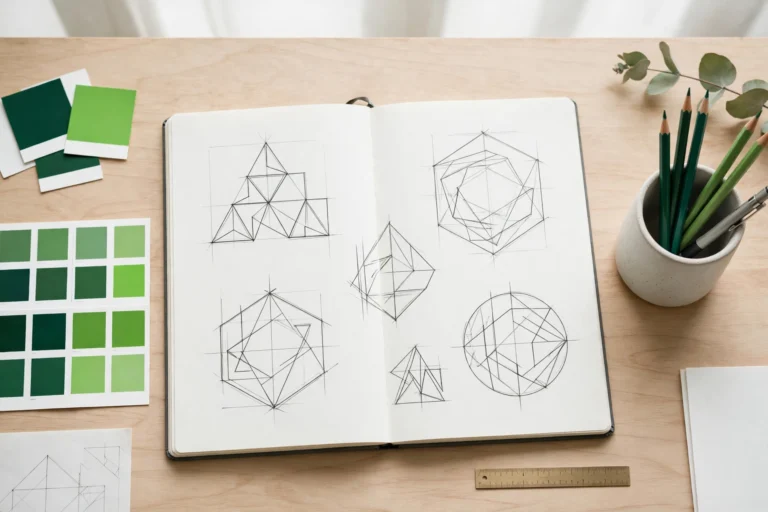
Leave a Reply